FERGANI’S FIFTH SATELLITE IN ORBIT!
March 30, 2026, 10:12 p.m.
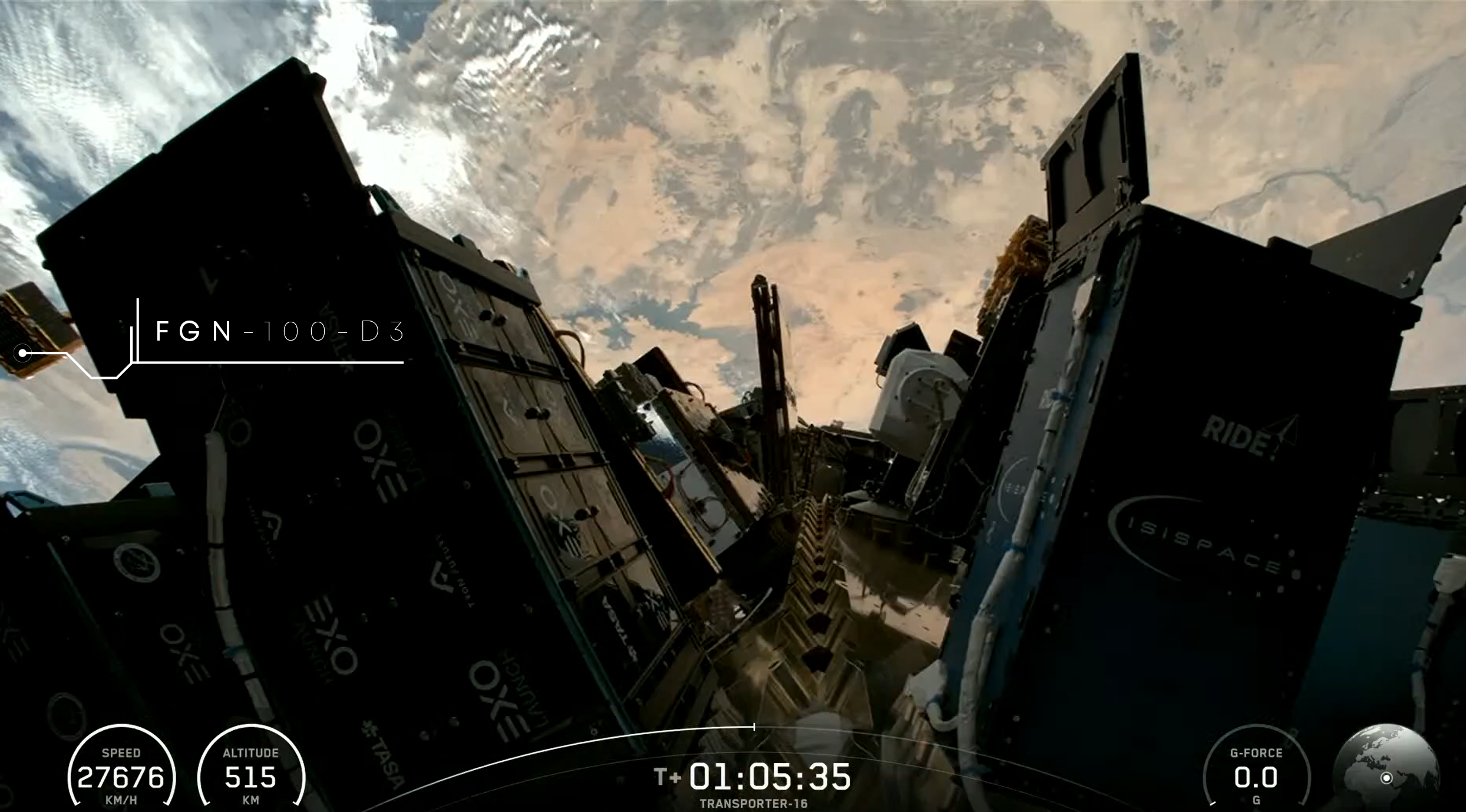
Fergani Space’s fifth test satellite, FGN-100-D3 – developed entirely with indigenous capabilities — has been launched into space. The next-generation indigenous satellite, weighing 113 kg and equipped with communications and navigation capabilities, has successfully reached its designated orbit and commenced operations.
CALIFORNIA
30 MARCH 2026
Founded by Baykar Chairman and CTO Selçuk Bayraktar, Fergani Space launched its fifth indigenously-developed test satellite, FGN-100-D3, at 14:02 Turkish Standard Time (TST) on 30 March 2026 from Vandenberg Space Force Base in the United States. Launched as part of SpaceX’s Transporter-16 mission, the satellite successfully separated from the launch vehicle approximately 66 minutes after liftoff – at 15:08 TST – and settled into its target orbit at an altitude of 500-520 km.

FULL INDEPENDENCE THROUGH INDIGENOUS TECHNOLOGY
FGN-100-D3 represents a significant advancement over Fergani’s previously launched satellites, incorporating a series of technological innovations. The satellite features critical components developed entirely in-house at Fergani, including a reaction wheel, magnetic torque rod, magnetometer, IMU, and GNSS receiver. It also contains an AI-powered computer for advanced missions. The in-space validation of this indigenous avionics equipment – and the establishment of a space heritage for these technologies – is a milestone of significant importance for Türkiye’s path toward full independence in space technologies.

THE NEWEST LINK IN SPACE
Fergani Space has continued to consolidate its presence in space through a succession of major achievements since the beginning of 2025. Fergani's space journey began with the launch of the first satellite in the series, FGN-100-D1, in January 2025, followed by FGN-100-D2 — Türkiye's largest privately developed satellite at 104 kg — which took its place in orbit on 2 November 2025. This was followed on 28 November 2025 by the launch of the world's first hybrid-propulsion-system-based Orbital Transfer Vehicle (FGN-TUG-S01), which also carried FRG-100-D2, a CubeSat weighing 10 kg, aboard. Through its innovative hybrid engine technology and the first in-space ignition, the indigenous OTV marked a critical step forward in Türkiye's in-space logistics capabilities.
 ULUĞ BEY POSITIONING SYSTEM
Fergani Space aims to complete the 100+ satellite Uluğ Bey Global Positioning System entirely through its own resources within the next five years. Once this constellation is operational, Türkiye will possess its own independent navigation and communications network — capabilities it will be able to share with friendly and kindred nations. While the satellite constellation is being built out, development of an indigenous launch vehicle is also progressing in parallel.